
For nearly two decades, smartphones have been the center of our digital lives. They help us communicate, navigate, work, shop, take photos, watch videos, and manage countless daily tasks. It is difficult to imagine a world without them.
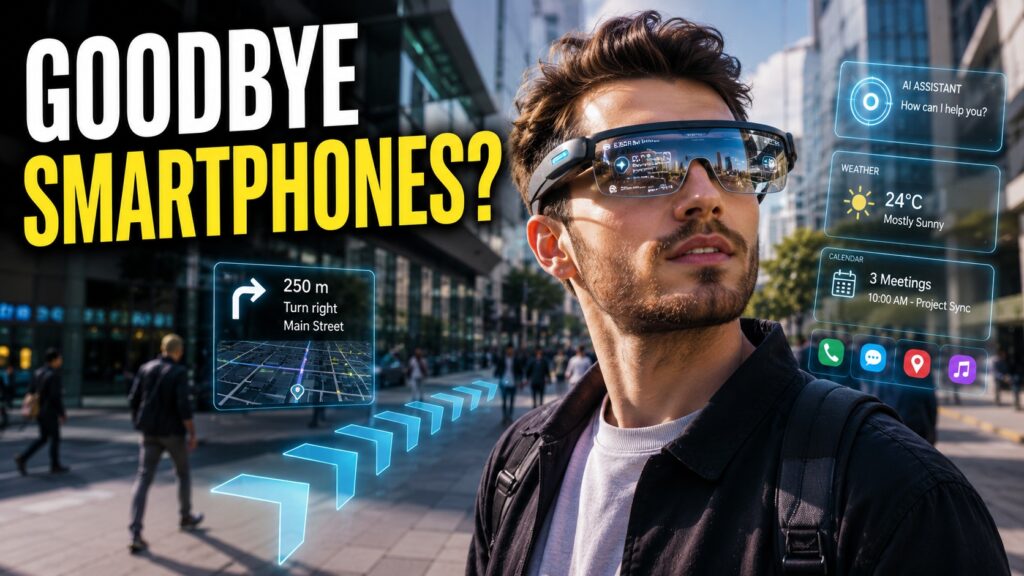
But technology evolves quickly.
Just as smartphones replaced many devices such as cameras, GPS units, MP3 players, and even desktop computers for everyday tasks, a new generation of wearable technology is beginning to raise an important question:
Could smart glasses eventually replace smartphones?
Major technology companies are investing billions of dollars into augmented reality (AR), artificial intelligence (AI), and wearable computing. Their goal is to create devices that seamlessly blend digital information with the real world.
While smartphones still dominate today, smart glasses are becoming smarter, lighter, and more useful every year.
Many experts believe they could become the next major computing platform.
What Are Smart Glasses?
Smart glasses look similar to traditional eyewear but contain advanced technology inside their frames.
Depending on the model, smart glasses may include:
- Cameras
- Microphones
- Speakers
- Artificial intelligence assistants
- GPS navigation
- Internet connectivity
- Augmented reality displays
- Voice controls
Some models display information directly in front of the wearer’s eyes, while others focus on audio assistance and AI-powered features.
The goal is simple: provide digital information without requiring users to constantly look down at a phone.
How Smart Glasses Work
Modern smart glasses use a combination of hardware and software technologies.
Cameras
Built-in cameras allow glasses to capture photos, videos, and real-time environmental information.
AI Assistants
Artificial intelligence can recognize objects, answer questions, provide translations, and deliver contextual information.
Augmented Reality Displays
AR overlays digital content onto the real world.
Users might see:
- Directions floating in front of them
- Notifications
- Weather information
- Language translations
- Business information
- Navigation prompts
Voice Interaction
Instead of tapping a screen, users interact through voice commands.
This hands-free approach is one of the biggest advantages of wearable computing.
Why Tech Companies Are Betting on Smart Glasses
Many technology leaders believe smartphones may eventually reach their limits.
People already spend hours every day staring at screens.
Smart glasses offer a more natural way to access digital information.
Potential benefits include:
Hands-Free Computing
Users can access information while walking, driving, working, or exercising.
Faster Access to Information
Instead of unlocking a phone, information appears instantly.
Better Navigation
Directions can appear directly within the user’s field of view.
Enhanced Productivity
Workers can receive instructions, check information, and communicate without interrupting tasks.
Real-Time Translation
Future systems could translate conversations instantly while displaying subtitles in front of users.
The Role of Artificial Intelligence
Artificial intelligence is one of the biggest reasons smart glasses are gaining momentum.
AI-powered glasses can:
- Identify objects.
- Recognize landmarks.
- Answer questions.
- Summarize information.
- Provide contextual recommendations.
- Assist visually impaired users.
Imagine looking at a restaurant and instantly seeing reviews, menu details, and operating hours.
Or traveling in a foreign country while AI translates conversations in real time.
These capabilities are becoming increasingly realistic.
Could Smart Glasses Replace Smartphones?
This is the question driving much of today’s innovation.
To replace smartphones, smart glasses would need to perform many common tasks, including:
- Messaging
- Calling
- Navigation
- Photography
- Video recording
- Internet browsing
- AI assistance
- Payments
In theory, future smart glasses could handle all of these functions.
Instead of pulling a device from your pocket, information would simply appear when needed.
However, several challenges remain.
The Biggest Challenges Facing Smart Glasses
Battery Life
Advanced displays, cameras, and AI processing consume significant power.
Creating lightweight glasses with all-day battery life remains difficult.
Privacy Concerns
Smart glasses equipped with cameras raise privacy questions.
People may feel uncomfortable being recorded without knowing it.
Cost
Current smart glasses can be expensive.
Widespread adoption may depend on lower prices.
Social Acceptance
Many people are not yet comfortable wearing technology on their faces all day.
Design improvements will play a major role in adoption.
Display Limitations
Creating high-quality displays that remain comfortable for long periods is a major engineering challenge.
How Smart Glasses Could Change Everyday Life
If smart glasses become mainstream, daily life could look very different.
Commuting
Navigation instructions could appear directly on roads and sidewalks.
Shopping
Product reviews and pricing information could appear automatically while browsing stores.
Travel
Language barriers could be dramatically reduced through real-time translation.
Education
Students could access information without switching between books and devices.
Healthcare
Doctors could view patient information while treating patients.
Business
Workers could receive instructions and collaborate remotely through augmented reality.
The Smartphone’s Advantage
Despite the excitement surrounding smart glasses, smartphones still have major advantages.
They offer:
- Large screens
- Powerful processors
- Mature app ecosystems
- Familiar user experiences
- Lower costs
For many tasks, a traditional smartphone remains more practical.
Because of this, most experts expect smart glasses to complement smartphones before replacing them.
What the Future Might Look Like
The most likely scenario is a gradual transition.
Over the next decade, users may rely on:
- Smartphones
- Smartwatches
- Smart glasses
- AI assistants
Working together as connected devices.
Eventually, advances in battery technology, AI, and augmented reality could make smart glasses powerful enough to become the primary personal computing device.
If that happens, future generations may view smartphones the same way we now view flip phones—important stepping stones in the evolution of technology.
Final Thoughts
Smart glasses are no longer science fiction. They are rapidly evolving into practical devices capable of delivering information, communication, and AI-powered assistance directly within our field of vision.
While smartphones are unlikely to disappear anytime soon, smart glasses are becoming increasingly capable of performing many of the same functions.
Whether they fully replace smartphones or simply become their next evolutionary step, one thing is clear: wearable technology is moving closer to the center of our digital lives.
The next computing revolution may not be something we hold in our hands—it may be something we wear on our faces.